

Entrance Vastu
Traditional Vastu gives the entrance special attention because it is the main point of arrival.
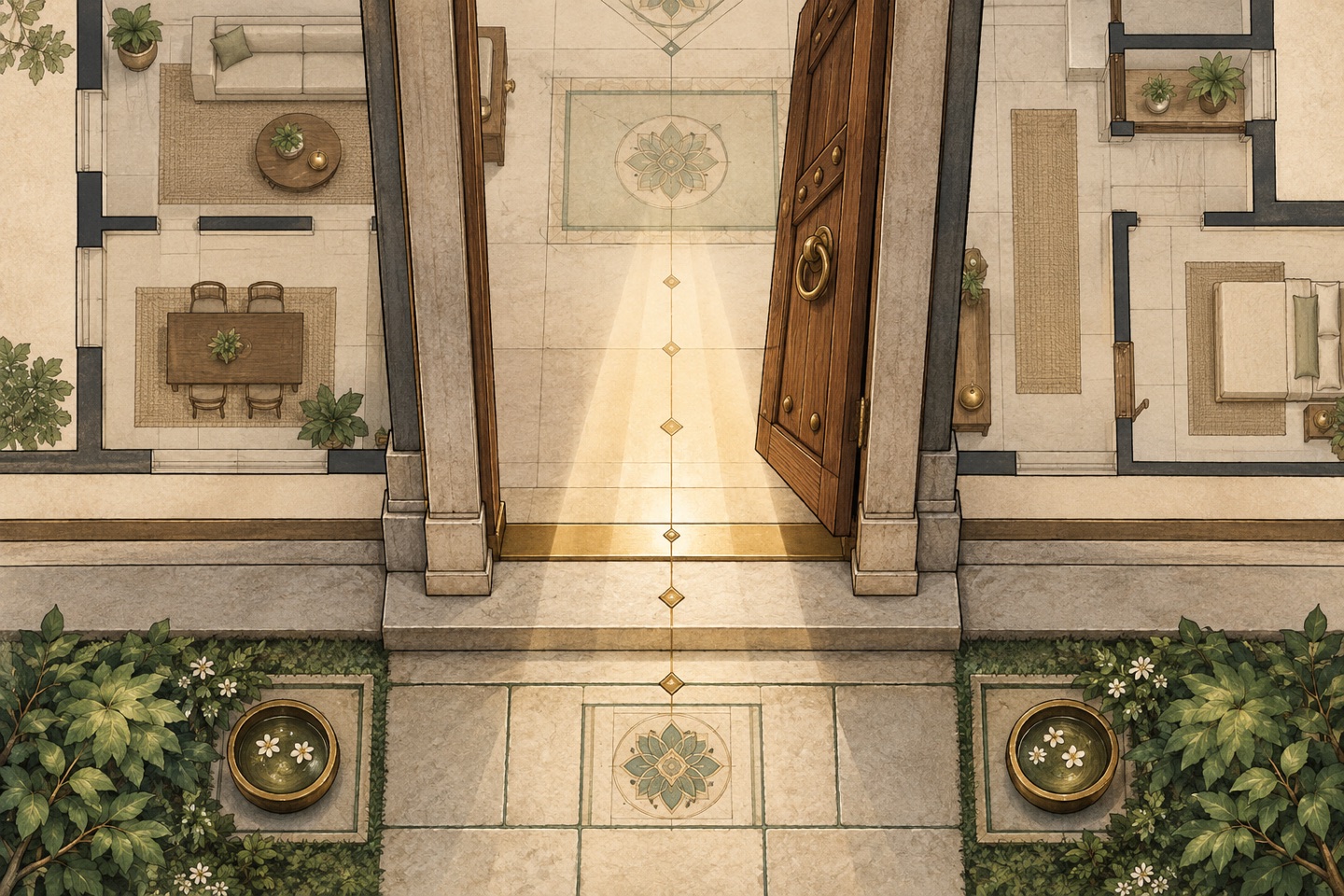
Traditional Vastu treats the main entrance as an important transition between outside and inside. Practitioners study its direction, exact boundary position, light, and physical clearance.
Why Entrance Matters Most
Some Vastu texts use the mouth as a metaphor for the entrance. In practical terms, keep the route clear, visible, safe, and easy to use.
Entrance Directions Explained
| Direction | Traditional association |
|---|---|
| Northeast | Many Vastu traditions prefer this direction and associate it with wisdom, clarity, and prosperity. |
| East | Traditionally associated with sunrise, vitality, new beginnings, and activity. |
| North | Traditionally associated with Mercury, trade, work, and prosperity. |
| West | Some Vastu schools rank this below north and east. Review the exact entrance pada before you consider a remedy. |
| South | Protective but challenging. Creates obstacles initially; over time you develop strength and overcome them. Avoid if possible. |
| Southwest | The least favorable. Creates significant obstacles — avoid a southwest-facing main entrance. Needs strong remedies if unavoidable. |
Entrance padas and Devtas
Each entrance direction has multiple padas, and each pada has a ruling Devta (see Padas & Devtas). Vastu traditions describe these associations as supportive or challenging. They do not predict health, wealth, or other life outcomes.
Improving a Non-Ideal Entrance
Not everyone can have a northeast or east entrance. If yours is suboptimal, you have options:
| Remedy | How |
|---|---|
| Remedial placements | A water fountain at a south entrance cools aggressive fire energy. A lamp at a west entrance brings more light and activity. |
| Threshold rituals | Light a lamp daily, chant a mantra — this activates the space and invokes positive energy. |
| Symbol placement | A swastika, Om, or lotus brings divine energy, as does an image of your chosen deity or guru. |
| Color correction | A south entrance needs cooling colors like blue or white; a north entrance can use warm colors like red or orange. |
| Plant life | Live plants bring growth energy — flowers, tulsi, bamboo, or money plants. Avoid thorny or poisonous plants. |
| Light | Bright, well-lit entrances invite energy. Natural light by day, warm lighting in the evening. Avoid dark, gloomy entrances. |
| Cleanliness | Sweep daily and remove shoe racks or clutter from the immediate entrance area — a clean entrance welcomes abundance. |
By direction
East — ideal for most homes. Add a small water feature or lamp, bright warm colors (yellow, white), keep it clear and well-lit.
West — needs more care. Balance with water elements, blues or whites, excellent lighting, and an evening lamp.
North — favors business owners and professionals. Add water elements or a mirror reflecting water, cool colors, and make sure water flows in, not out.
South — the most challenging. A continuously burning lamp, earth-element remedies (crystals, stones), and a symbol of strength or protection help — over time this entrance builds strength in you, though the journey is harder.
Explore all 32 entrance positions