

Room-wise Vastu
Each room has a purpose — Vastu helps you align each room with it.
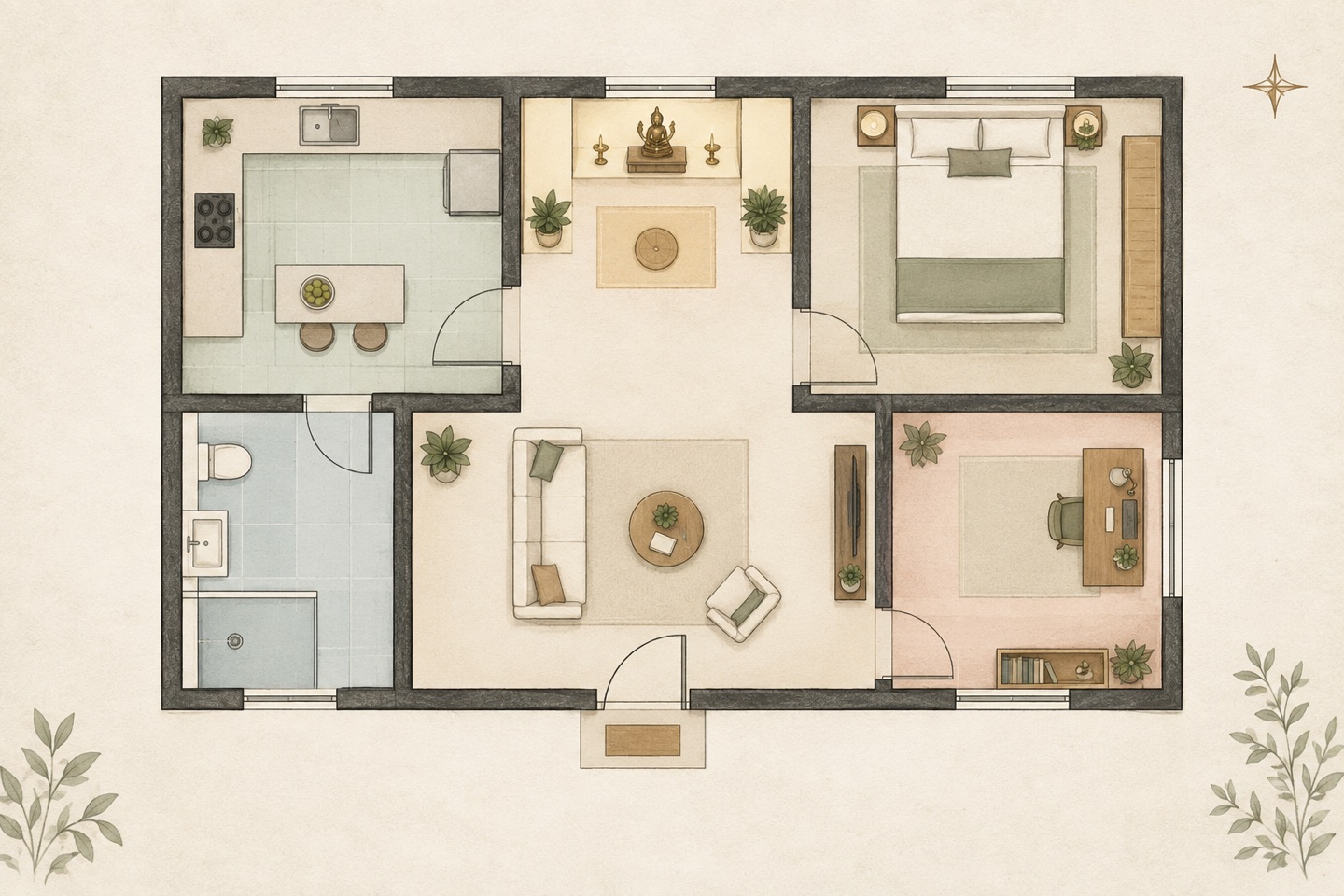
Kitchen
Traditional Vastu places the fire element in the southeast and often prefers that area for the stove. Appliance function still depends on safe installation and ventilation.
Placement
- Stove or cooktop in the southeast corner if possible
- Sink in the north or northeast (water balances fire)
- Refrigerator in the southeast or south
- Dining table in the east or northeast
Energy balance
Fire needs water to balance it — a kitchen without a water element becomes aggressive, and conflicts arise during meals. Place a water source (sink, water filter) in the north or northeast of your kitchen.
Tips
- Keep the kitchen clean and organized
- Avoid black colors — use whites, yellows, or warm tones
- Ensure good ventilation and light
- Never cook with your back to the entrance
- Store sharp objects out of immediate view
If your kitchen isn't in the southeast, place the cooking area in the southeast corner of that room and face east or south while cooking.
Bedroom
Traditional Vastu associates the earth element and the southwest with stability, grounding, and rest.
Placement
- Head of bed towards south or west (not north or east)
- Bedroom entrance in the east or north
- Heavy furniture on southern or western walls
- Light furniture on northern or eastern walls
Energy balance
Bedrooms need calm, grounding energy. Use soft colors like pale blue, cream, light green — avoid red or orange.
Tips
- Keep electronics out of the bedroom
- Minimize clutter and storage — bedrooms should feel open
- Ensure cross-ventilation and natural light
- Avoid mirrors facing the bed
- Use heavy curtains if the bedroom faces east or north
If your bedroom isn't in the southwest, use heavy furniture and darker colors to ground the space, and activate the south or west walls.
Living Room
Traditional Vastu associates east with sunrise and north with openness. Practitioners often prefer these areas for shared daytime rooms.
Placement
- Living room entrance in the east or north
- Seating arranged to face east or north
- Heavy furniture on southern walls
- Light, open furniture on northern or eastern walls
Energy balance
Living rooms should feel welcoming and energized. Warm but not aggressive colors work well — yellows, light greens, warm whites.
Tips
- Arrange seating in a circle or semi-circle for connection
- Use plants and flowers to bring life energy
- Ensure good air circulation
- Place a focal point (lamp, artwork) in the center
- Avoid dark corners — use lighting to brighten all areas
Pooja Room
Northeast is the most auspicious direction — divine energy is strongest here, and spiritual practice deepens.
Placement
- Pooja room in the northeast corner if possible
- Altar or prayer area facing east or north
- Idol or sacred image at eye level or higher
- Clean, elevated placement
Energy balance
Traditional Vastu keeps pooja rooms quiet and clean. Whites, gold tones, and fresh flowers are common symbolic choices.
Tips
- Keep the pooja room separate if possible — even a small corner works
- Light a lamp daily to activate spiritual energy
- Ensure natural light enters this space
- Avoid toilets or trash areas nearby
- Use purifying herbs like incense or sage
Bathroom
Bathrooms are zones of cleansing and water. Southeast (water + fire) or south (water element) both work well.
Placement
- Bathroom away from the northeast
- Bathroom entrance facing south or east
- Shower or tub in the southeast or south corner if possible
- Exhaust fan running to clear moisture quickly
Energy balance
Bathrooms process waste and excess — ensure thorough ventilation, and don't let water stagnate. Keep drains clean and flowing.
Tips
- Keep the bathroom spotless — cleanliness amplifies purification
- Use bright, clean colors like whites or light blues
- Place a small plant or flowers for freshness
- Ensure good lighting and ventilation
- Keep bathroom doors closed when not in use
Study Room
Traditional Vastu associates east with clarity and northeast with wisdom. Practitioners often prefer these directions for a study area.
Placement
- Study room entrance in the east or north
- Study desk facing east (ideally) or north
- Seating arranged to face east or northeast
- Storage along southern or western walls
Energy balance
Study spaces need clear, alert energy. Whites, light blues, or pale yellows work; avoid dark or heavy colors.
Tips
- Keep the desk clutter-free
- Ensure natural light during the day
- Place a lamp for evening study
- Use plants to bring growth energy
- Avoid TV, phone, or distracting elements in the study space